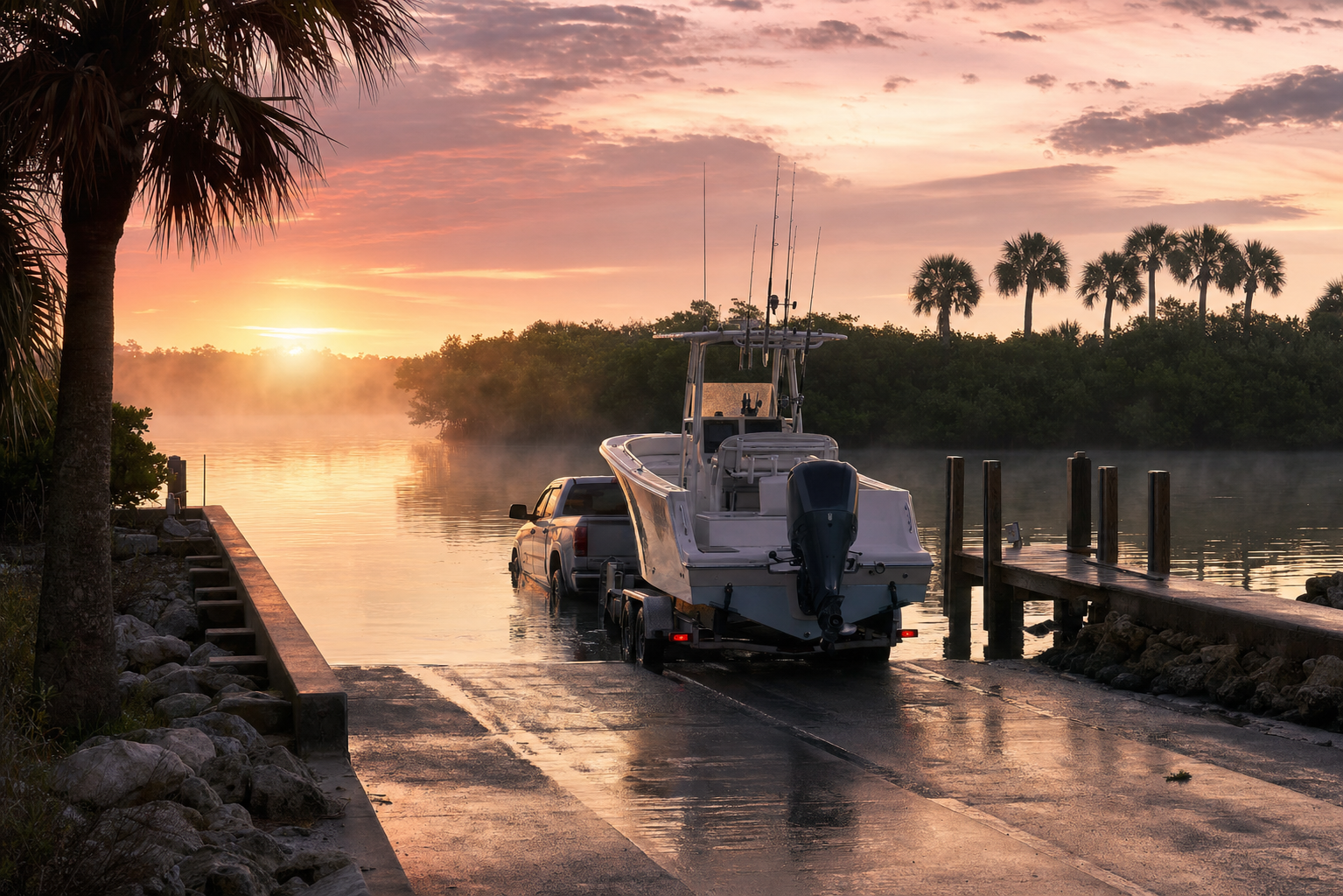
A pontoon is one of the best boats for Tampa Bay's shallow water — it drafts almost nothing and rides the flats comfortably. But launching one off a trailer is its own skill: pontoons are wide, catch wind like a sail, and sit differently on the bunks than a V-hull. Here's what actually matters, from eight years of putting a 20-footer in and out of Tampa Bay ramps.
Why a pontoon works here
Tampa Bay averages about 12 feet deep, but the water you'll actually boat — the flats, the passes, the sandbars — runs far shallower. A pontoon drafts roughly a foot. That opens up water that keeps deeper boats in the channel. The trade-off is windage: two or three aluminum tubes and a big flat deck act like a sail, and a crosswind at the ramp or the sandbar will push you sideways faster than you'd expect.
What a pontoon needs from a ramp
Not every ramp suits one. What I look for:
- A wide, working lane. Pontoons are 8 to 8.5 feet wide on the trailer. A narrow or half-closed ramp turns a simple launch into a threading exercise. (At Fort De Soto, only one double ramp is currently working after hurricane damage — wide enough, but it's the whole show on a weekend.)
- Enough water at the ramp foot. Pontoons float high but the trailer still has to get deep enough for the boat to slide off the bunks. A ramp that ends in a shallow flat means a long walk or a stuck trailer.
- A dock you can actually use. You'll want to tie off and move the trailer. A launch dock — not just a seawall — makes this one-person-possible.
Backing down and floating off
Two habits make it uneventful. Go slower than feels necessary — the trailer and the wide boat block your mirrors, so pick your line before you start and trust it. And watch the wind before you unhook: if there's a crosswind, position so it pushes the boat toward the dock, not away from it. A pontoon will drift off the trailer on its own once it's floating — the question is whether it drifts where you want it.
Retrieving
Retrieval is where pontoon owners earn their reputation at the ramp. The boat is light and high, so it moves on wind and current the moment it's off the bunks. Come in slow, use the wind instead of fighting it, and don't power hard onto the trailer — center it by hand if you have to. The tubes will forgive a slow nudge; they won't forgive a fast, crooked one.
Where I launch
Fort De Soto, into Bunces Pass. Wide ramp, launch dock, 24 hours, ParkMobile about $6 covering boat and trailer, and it drops you straight onto some of the best pontoon water in the county.